




If you’re interested in buying contact lenses, there’s a very likely chance that you’ve got some questions. Contact lenses are complicated enough as it is, but what about the human eye? There’s so much to learn about this special part of the body, so we thought we’d gather all of the information in one place and give you a handy glossary of eye anatomy. But first, let’s address some of your most frequently asked questions about the eye.
HOT TOPICS
LATEST
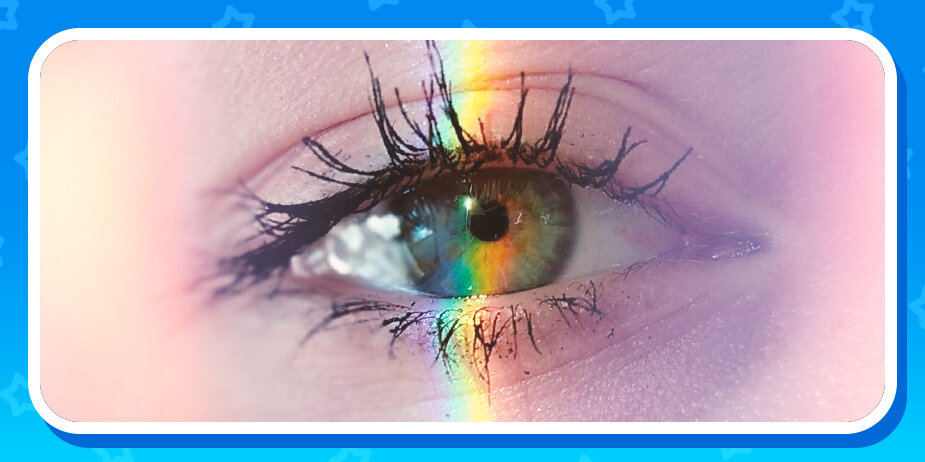
The Human Eye: A Glossary
Is the eye a muscle?
No, the eye isn’t a muscle, it’s a complicated sensory organ. However, each eye is surrounded by six strong sections of muscle, which help the eye contract and relax as it views things.
How does the eye work?
It’s a pretty complicated process, but here are the steps in simple terms: first, light hits your eye and is refracted to the retina, the part at the back of your eyeball. The retina scans the rays of light and sends a signal up to your brain through the optic nerve. That’s how we see the world around us.
Glossary:
-
Cornea
This is the see-through part that covers the entirety of your eye, keeping it all safe.
-
Iris
This is the colourful part of the eye, made up of tissue. It sits around the pupil.
-
Pupil
The pupil is the black hole at the centre of the eye. This lets in light.
-
Sclera
This is the white part of the eyeball, acting as a protective layer around the pupil and iris.
-
Retina
The sensory tissues at the back of the eye, that pick up light signals and send them to the brain.
-
Ciliary Muscle
The muscles around your eye that control your lens, contracting or relaxing to help the lens focus on different objects.
-
Crystalline Lens
The structure behind the iris. Convex and see-through, it focuses the rays of light onto the retina.
-
Visual Nerve
Also known as the optic nerve. Sends information from the retina up to the brain.
-
Central Fovea
A section of the retina that helps with seeing colour.
-
Optic Disc
The point where the optic nerve begins. This causes a blind spot in your vision.
-
Choroid
The layer on the back of the eyeball that provides the retina with oxygen and nutrients.
Buying Contact Lenses
Now that you know exactly what each part of your eye does, you might be thinking, what does this have to do with contact lenses? Is there something that you need to know when purchasing contact lenses? Actually, yes. We recommend that everybody visit a trusted eye-care provider prior to their first lens purchase, so that they can be signed off on safe lens wear. Eye-care providers will also provide you with your eye prescription and eye measurements (your diameter and base curve). This will help you to pick out the perfect lenses for you, so that you can have a safe and comfortable lens-wearing experience. We do our best to provide you with as many contact lens options as possible, but of course, picking out the perfect contacts can still be tricky. If you have any more questions about choosing the right lenses or contact lens care, check out our other care guides below.